
If you’re outfitting a department, building a training program, or stocking up on personal duty gear, you already know how expensive law enforcement supply can get. A single officer’s full kit, from holsters and handcuffs to tactical vests and training tools, can run into thousands of dollars. So it’s no surprise that a lot of departments and individual officers start asking: can we save some money by going used?
The honest answer is, it depends. Some law enforcement supply holds up just fine secondhand and can save you a good chunk of money. Other gear should always be bought new, no exceptions. Getting this wrong isn’t just a budget problem; it can be a safety problem. So let’s walk through what’s worth buying secondhand and what you should never cut corners on.
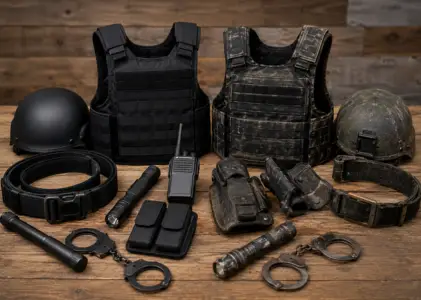
Law enforcement budgets have been under pressure for years. According to the Bureau of Justice Statistics, local police departments across the U.S. continue to report funding constraints that affect equipment purchases. In 2026, with inflation still affecting procurement costs and supply chain issues that carried over from previous years, agencies are looking harder at ways to stretch every dollar.
At the same time, the used market for law enforcement supply has grown significantly. Online auctions, government surplus sales, and specialty resellers have made it easier than ever to find secondhand gear. But more availability doesn’t automatically mean more safety or better value. You have to know what you’re looking at.
Let’s start with the good news. There is a solid category of law enforcement supply that you can confidently purchase secondhand without losing much, or anything, in terms of performance.
Furniture and storage equipment like gun racks, lockers, and shelving units are typically fine used. These items don’t wear in ways that affect safety, and they’re easy to inspect visually. The same goes for most administrative gear, desks, filing systems, vehicle mounts for laptops, and similar items that aren’t worn on the body or used in high-stakes situations.
Holsters are another item that many experienced officers and quartermaster staff say can be bought used, with some caution. A quality leather or Kydex holster that’s been well-maintained and shows no cracks, warping, or broken retention mechanisms can still serve you well. That said, inspect it closely and know the brand’s history. Cheap holsters in poor condition should always be passed over, no matter the price.
Duty belts, magazine pouches, and soft goods like molle pouches and gear carriers can also be good used buys, as long as the stitching is intact, the hardware isn’t corroded, and the material hasn’t been compromised. Many of these are over-engineered to last years of heavy use.
Now here’s where things get serious. Certain categories of law enforcement supply should never be purchased secondhand, and this isn’t just an opinion; it’s about officer safety and liability.
Body armor is the clearest example. Ballistic vests have a manufacturer-rated lifespan, typically five years, and that clock starts the moment the vest is made, not when it’s first worn. A used vest may be past its warranty, may have invisible damage from prior impacts, or may have been stored improperly (excessive heat or moisture degrades the ballistic materials significantly). No matter how good a deal looks, used body armor is a risk that simply isn’t worth taking.
Helmets fall into the same category. Tactical and ballistic helmets, like bicycle and motorcycle helmets, can sustain internal structural damage from a single impact that isn’t visible on the outside. There’s no safe way to inspect a used helmet for this kind of damage without specialized testing equipment.
Firearms are a more nuanced category. Buying a used service weapon from a reputable dealer who has inspected and certified it is common practice and generally acceptable. But buying a firearm without a documented maintenance history, from an unknown source, introduces real risk. Always have any used firearm inspected by a certified gunsmith before putting it into service.
When it comes to training equipment, specifically simunition weapons, the calculus changes quite a bit. Simunition weapons are the dedicated conversion systems and training platforms used to fire simunition FX marking cartridges in force-on-force training scenarios. These are precision tools. They’re engineered to function within tight tolerances, and when something is off, the results can range from malfunctions to training injuries.
Buying used simunition weapons without a full maintenance and inspection history is risky. The wear patterns on a simunition conversion kit matter. If the barrel, bolt, or feeding components have been heavily used without proper cleaning and servicing, reliability drops, and in a training environment where you’re simulating real scenarios, unreliable equipment defeats the entire purpose.
If you do encounter used simunition weapons on the market, make sure you’re getting full documentation of service history, and ideally have them inspected by someone trained to service that specific platform. Otherwise, buying new through an authorized law enforcement supply distributor is the safer and more cost-effective long-term choice.
This one is simple. Simunition fx marking cartridges are ammunition, and used ammunition, partial boxes, or cartridges of unknown storage history should never be used in training scenarios. The propellant and marking compound in Simunition FX marking cartridges can degrade over time or with poor storage conditions (temperature extremes, humidity), which affects both reliability and the predictability of the round’s behavior.
Beyond performance, there are liability concerns. If a training injury occurs and the ammunition involved can’t be traced to a proper, documented purchase, the department or training coordinator is in a difficult position legally. Always buy Simunition FX marking cartridges new, in sealed packaging, from an authorized law enforcement supply source. This is non-negotiable.
Simunition protective equipment, including face shields, throat protectors, groin guards, and gloves, is designed to protect trainees from the impact of marking cartridges at close range. While these aren’t ballistic products in the traditional sense, they serve a genuine protective function.
Used Simunition protective equipment can be acceptable if it passes a thorough inspection. Check face shields for cracks, deep scratches, or fogging that reduces visibility. Inspect throat and groin protectors for compression damage or cracked padding. Gloves should show no tears or separation in the materials. Any piece of simunition protective equipment that doesn’t pass visual and physical inspection should be retired.
That said, when you’re outfitting a new training program or replacing aging gear, buying new simunition protective equipment is the right move. The cost difference per unit is generally modest, and you get the assurance that nothing has been compromised from prior use.
Whether you’re buying new or used law enforcement supply, the process matters. Start with a clear equipment audit, know exactly what you have, what needs replacing, and what the condition of each item is. This gives you a baseline and helps you prioritize where to spend.
When buying used, stick to reputable sources. Government surplus auctions from GSA (General Services Administration) and state-run surplus programs are generally reliable. Specialty law enforcement supply dealers who inspect and certify secondhand gear are another good option. Avoid anonymous online marketplaces for safety-critical items.
And when buying new, look for distributors who specialize in law enforcement supply, not general sporting goods retailers. Specialists carry the brands your department actually needs, can provide proper documentation, and often offer volume discounts for departments purchasing in bulk.
Buying used law enforcement supply makes sense in the right categories. Storage equipment, soft goods, and administrative items can all be purchased secondhand without meaningful risk. But safety-critical items, body armor, helmets, simunition weapons without documented service history, simunition FX marking cartridges, and compromised simunition protective equipment should always be purchased new from a trusted law enforcement supply source.
Getting this right isn’t just about saving money. It’s about making sure every officer goes home at the end of the day, and every training scenario is as safe and effective as it needs to be.
It depends on what you’re buying and where you’re buying it from. General equipment like storage gear, molle pouches, or duty belts can be safely purchased secondhand from reputable sellers. However, safety-critical law enforcement supply, including body armor, helmets, and training tools like simunition weapons, should only be bought used from verified dealers with documented inspection records. Always avoid anonymous online listings for anything worn on the body or used in active training.
Technically, yes, but it comes with risk. Simunition weapons are precision training tools, and their condition is directly tied to their reliability and safety in training scenarios. If you’re considering used simunition weapons, insist on a complete service and maintenance history, and have the equipment inspected by a qualified technician before use. Many law enforcement supply professionals recommend buying new to avoid the uncertainty.
Simunition FX marking cartridges have a manufacturer-recommended shelf life, and their performance can be affected by improper storage conditions like excessive heat, cold, or humidity. For this reason, you should always buy Simunition FX marking cartridges new and in sealed packaging from an authorized law enforcement supply distributor. Using old or improperly stored cartridges in training creates both a performance and a liability risk.
The short list: body armor (ballistic vests), tactical and ballistic helmets, simunition FX marking cartridges, and any law enforcement supply with unknown maintenance or storage history. These items directly affect officer safety, and the cost savings from buying used simply don’t justify the risk. Simunition protective equipment that shows visible damage or wear should also be retired and replaced with new.
A few smart approaches: buy non-safety-critical items used from government surplus programs or certified dealers, purchase in bulk to get volume discounts on new gear, apply for federal or state equipment grants (many are available specifically for law enforcement supply), and work with specialist law enforcement supply distributors who offer department pricing. Conducting regular equipment audits also helps you avoid unnecessary purchases by identifying what’s still serviceable.