
If you’ve spent any time around law enforcement or military training, you’ve probably heard the term simunition gun tossed around, usually right before someone talks about getting shot with a paint-marking round in a training scenario. If you’re new to this world, the whole idea can sound confusing at first. Is it a real gun? Is it a toy? Does it actually hurt? This guide breaks down exactly what a simunition gun is, how it fits into force-on-force training, and what you need to know before your agency or team starts using one.
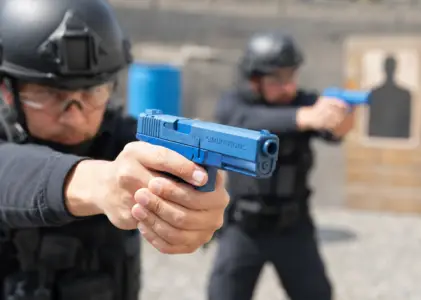
A simunition gun isn’t really a separate weapon on its own. It’s actually a real service firearm, like the same pistol or rifle an officer carries every day, that’s been temporarily converted so it can safely fire Simunition training ammunition instead of live rounds. The word “Simunition” itself is a brand name, short for simulation ammunition, made by General Dynamics – Ordnance and Tactical Systems. It’s become so widely used in law enforcement and military circles that people just say “simunition gun” the way people say “Band-Aid” instead of “adhesive bandage.”
To turn a duty weapon into a simunition gun, you install a drop-in conversion kit called a bolt or barrel conversion, depending on the firearm. This kit does two important things: it stops the weapon from being able to fire live ammunition while converted, and it allows it to safely cycle the special training cartridges. Once training is done, the kit comes out and the weapon goes right back to normal duty status. Nothing about the firearm is permanently altered.
Here’s something people new to force-on-force training often get wrong: they assume because the rounds are “non-lethal,” they’re basically harmless. That’s not quite true. FX marking cartridges are tactically accurate up to about 25 feet for 9mm and .38 caliber rounds, and up to 100 feet for 5.56mm rounds. At close range, especially inside that 25-foot window, the impact still carries enough energy to break skin, raise a welt, or cause a much more serious injury if it hits an unprotected area like the eyes.
A published study on the traumatic potential of these marking cartridges found that the actual risk of injury is very low, but only when the recommended protective equipment is worn correctly. Without it, the same study noted that hits to bony areas of the body can cause bruising or shallow cuts, and an unprotected hit to the eye can cause severe, permanent damage. That’s not a small detail. It’s the entire reason simunition protective equipment exists in the first place. There’s also real-world medical evidence backing this up. Case reports have documented serious eye injuries in training exercises where protective gear wasn’t consistently worn, including at least one documented case of a marking round penetrating the eye and causing lasting damage. These aren’t scare tactics. They’re the reason agencies build mandatory gear checks into every single training session, no exceptions.
Not every Simunition round is a marking cartridge, and it’s worth knowing the difference since agencies often use more than one type depending on the drill. Simunition FX marking cartridges come in several colors and contain a detergent-based, water-soluble compound that leaves a visible mark on contact, which is what lets instructors evaluate simulated hits during a scenario. These are the rounds most people picture when they think of force-on-force training. There are also non-marking FX cartridges, which behave the same way ballistically but don’t leave any color behind. These get used for movement drills, weapon-handling practice, or repetitive scenario runs where instructors care more about realistic function than visible marking. On top of that, there are SecuriBlank cartridges, which contain no projectile at all and are used purely for noise simulation during malfunction drills or classroom-style training where the sound of a weapon firing matters more than the impact.
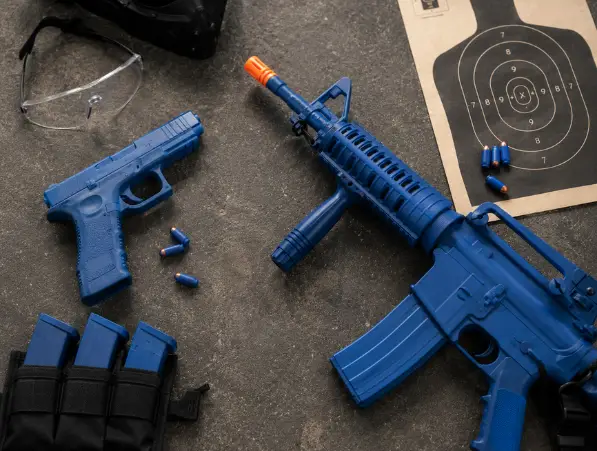
This is the part beginners sometimes underestimate. Even though simunition ammunition is designed to be non-lethal, it still travels with enough force to cause real injury, especially to the eyes, throat, and other sensitive areas, if proper protection isn’t worn. That’s why simunition protective gear isn’t optional, it’s a requirement anytime FX marking or non-marking rounds are in use.
A full protective setup typically includes an approved full-face mask, a throat protector, a groin protector, and often padded gloves, a vest, and protective pants or sleeves depending on the intensity of the scenario. This gear is specifically designed to work with the reduced-energy impact of FX rounds, and skipping any piece of it, even for a “quick” drill, is one of the fastest ways for a training exercise to turn into an actual injury. Most training standards, including Simunition’s own certification courses, require this protective equipment to be worn by every single participant, instructors included. Who Uses Simunition Guns, and Why It Matters in 2026
Simunition guns are used heavily by law enforcement agencies, military units, and increasingly by professional security and tactical training companies. The appeal is simple: it’s realistic, repeatable, and a lot safer than trying to simulate high-stress encounters with live weapons or improvised training methods. As force-on-force training has become a bigger focus in modern law enforcement training programs, especially around decision-making and de-escalation, demand for simunition training equipment and protective gear has grown right along with it.
Training providers in 2026 continue to expand certification courses built specifically around FX marking cartridge systems, covering everything from safe conversion kit installation to running structured, scenario-based exercises. This reflects a broader shift in law enforcement training toward realistic, high-repetition scenario work rather than relying only on traditional range qualifications. Getting Started the Right Way
If your department or team is new to this, the most important first step isn’t buying equipment, it’s getting proper training on how to run these exercises safely. Reputable programs teach safe conversion procedures, correct storage and separation of live versus training ammunition, and how to structure scenarios so they actually build useful skills instead of just being chaotic. Once your instructors are certified, sourcing the right simunition gun conversion kits, FX marking cartridges, and protective gear from a supplier that specializes in law enforcement equipment makes the whole process a lot smoother. Final Thoughts
A simunition gun is really just a familiar duty weapon given a temporary makeover so it can run safe, realistic training scenarios using specialized ammunition. When it’s paired with proper simunition training equipment and the right protective gear, it becomes one of the most effective tools available for teaching officers and military personnel how to make split-second decisions under pressure. Skip any part of that setup, though, and you’re taking on risks that this kind of training is specifically designed to avoid.
Yes and no. A simunition gun typically is a real duty firearm that’s been temporarily fitted with a conversion kit so it can only fire Simunition training ammunition instead of live rounds. Once the kit is removed, the weapon returns to normal operational status.
They can sting or bruise on impact since they still carry enough force to leave a visible mark, which is the whole point of force-on-force training. This is exactly why full simunition protective gear, including a face mask, throat protector, and padded clothing, is required for everyone involved in training.
At minimum, you need weapon-specific conversion kits, a steady supply of FX marking or non-marking cartridges, secure ammunition storage that keeps training rounds separate from live ammo, and a dedicated space suited for scenario-based drills.
Simunition products are primarily sold to law enforcement agencies, military units, and approved training organizations rather than the general public, and many suppliers require proof of agency affiliation before selling conversion kits or FX cartridges.
Because FX marking cartridges still travel with real force, even a brief, low-intensity drill carries injury risk to unprotected areas like the eyes and throat. Protective gear is built specifically to handle that impact safely, and skipping it for the sake of a quick session isn’t worth the risk.