
If you have ever watched police officers or military units run training drills and wondered how they practice real-life scenarios without actually shooting each other, the answer is simunition weapons. These specialized training tools have changed the way professionals prepare for dangerous situations, making drills feel a lot more realistic and a lot more effective than simply firing at paper targets on a range.
This guide breaks down everything you need to know about simunition weapons, what they are, how they work, who uses them, and why they have become a standard part of serious law enforcement and military training programs across the United States.
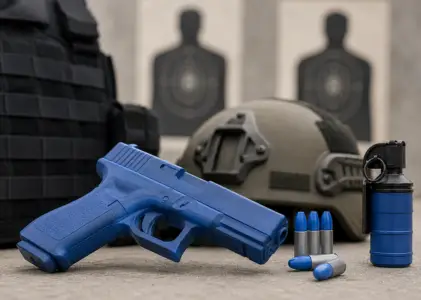
Simunition weapons are modified or converted firearms that fire special marking cartridges instead of live rounds. The cartridges are filled with a water-soluble paint that leaves a colored mark when it hits a target. This means that during a training exercise, officers and soldiers can actually shoot at each other, in a controlled setting, and know exactly who got hit and where.
The name “Simunition” actually comes from a brand that has become so widely used that people now use the word as a general term for this type of training system, similar to how people say “Kleenex” when they mean any tissue. The technology was originally developed in the 1980s and has been refined significantly since then.
The big idea here is simple: learning to shoot accurately is one thing, but learning to make good decisions under pressure, in real environments, against real people who are reacting to you, that is something only a force-on-force exercise can teach. Simunition weapons make that kind of training possible.
Standard firearms cannot fire simunition cartridges as-is. To use simunition ammunition, a weapon typically needs a conversion kit, most commonly a bolt conversion, that replaces part of the firearm’s internal mechanism. This conversion ensures the gun will only cycle with simunition rounds and cannot accidentally chamber or fire live ammunition during a training session.
Many agencies use firearm parts and accessories like these conversion kits on their actual duty weapons, which means officers train on the same pistol or rifle they carry on the job. That is a major advantage because the weight, grip, and operation feel identical to what they are already used to. The muscle memory built in training directly carries over to the field.
The marking cartridges themselves use a much lower pressure than standard ammunition, which limits their effective range and reduces the risk of serious injury. They are designed to sting when they hit but not to cause lasting harm, as long as proper simunition protective equipment is being used, which we will get to in a moment.
Ask any experienced law enforcement trainer, and they will tell you the same thing: range training builds marksmanship, but simunition training builds judgment. Those are two very different skills, and both matter enormously in the field.
During a force-on-force exercise with simunition weapons, officers face scenarios that are actually difficult: a suspect who moves unpredictably, a room that looks clear but is not, a situation where using force might not be the right call at all. Because the stakes feel real (getting hit with a marking round stings and means you “lost” the scenario), the stress response is real too. And learning to make smart decisions under stress is exactly what this kind of training is designed to build.
According to training research and data from law enforcement agencies, officers who participate in regular force-on-force training using simunition weapons show measurably better performance in decision-making during actual incidents compared to those who only train on static ranges. As of 2026, force-on-force training programs have been adopted by a large majority of U.S. federal law enforcement agencies and by military branches, including the Army and Marine Corps, as part of their standard pre-deployment readiness programs.
Military units use simunition weapons for everything from room-clearing drills to convoy ambush simulations. The ability to run a full scenario multiple times, identify mistakes, and correct them before they happen in a live environment is invaluable.
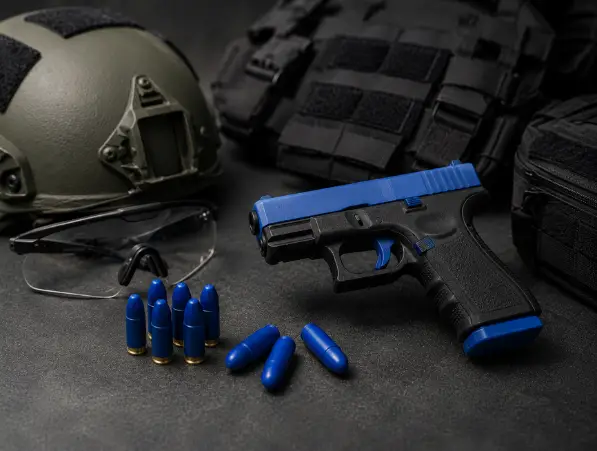
No simunition training session should ever happen without the right simunition protective equipment. While the rounds are low-velocity compared to live ammunition, they can still cause real injuries if they hit unprotected areas, especially the eyes, throat, and ears.
Standard simunition protective equipment typically includes a full-face mask with ballistic-rated lenses, a throat protector, padded gloves, and groin protection. Some kits also include padded jackets or vests, particularly for close-quarters scenarios where hits to the torso are likely.
Good protective gear does two things. First, it physically protects the trainee. Second, it reinforces a safety mindset. When you are suiting up before a drill, it signals that what you are about to do is serious and that there are real consequences to bad decisions. That psychological component is part of what makes simunition training so effective.
When sourcing simunition protective equipment, agencies should make sure the gear meets the specifications recommended by the ammunition manufacturer and is rated for the velocity of the specific cartridges being used. At Lawmen Supply Company, we help agencies pair the right protective gear with the right training systems so nothing is left to guesswork.
Simunition weapons do not replace other forms of training; they sit alongside them as a critical piece of the puzzle. Most agencies use a layered approach that includes static range work, scenario-based simunition drills, and in many cases, dry-fire practice and de-escalation training.
For duty ammunition needs outside of training, many law enforcement agencies rely on brands like Speer ammunition. Speer is one of the most trusted names in law enforcement ammunition, and their Gold Dot line in particular has been a go-to choice for patrol officers and investigators across the country for decades. The same attention to quality that makes Speer ammunition dependable in the field is what agencies look for when choosing their full training and duty ammunition programs.
Pair that with quality firearm parts and accessories, from conversion kits and holsters to optics and cleaning systems, and you have a complete setup that supports both live-fire readiness and realistic scenario training.
Simunition weapons are designed and sold exclusively for professional use, primarily by law enforcement agencies, military units, and authorized training facilities. They are not consumer products, and access to the conversion kits and marking cartridges is intentionally restricted.
This matters because the system is built around controlled training environments with qualified instructors, proper simunition protective equipment, and established safety protocols. Using simunition weapons without these safeguards in place would defeat the purpose and create unnecessary risk.
For agencies looking to set up or expand a simunition training program, working with an authorized distributor like Lawmen Supply Company ensures you are getting the right equipment, the right support, and the right guidance on how to run these programs safely and effectively.
Getting a simunition program off the ground involves several key components. First, you need compatible firearms or conversion kits that allow your existing duty weapons to fire simunition rounds. As mentioned earlier, these bolt conversions are among the most common firearm parts and accessories agencies invest in for this purpose.
Second, you need an adequate supply of marking cartridges for the calibers your agency uses. Third, every participant needs properly fitted simunition protective equipment before any live-fire scenario begins. And fourth, you need qualified instructors who understand how to design and run scenario-based exercises that actually build the decision-making skills you are after.
Lawmen Supply Company has been supporting law enforcement agencies across New Jersey and the broader tri-state area with simunition systems and the surrounding equipment since 1984. If your agency is considering starting or upgrading a force-on-force training program, reach out to our team for a quote and a conversation about what your specific needs look like.
Simunition weapons have earned their place as one of the most effective tools in modern law enforcement and military training programs. By making training feel real, with real firearms, real pressure, and real consequences within a safe, controlled environment, they build the kind of decision-making skills and stress management that no paper target ever could.
Whether your agency is just getting started with force-on-force training or looking to upgrade an existing program with better simunition protective equipment, higher-quality firearm parts and accessories, or a reliable supply of training cartridges, Lawmen Supply Company is here to help. We have been serving law enforcement since 1984, and we understand what agencies actually need, not just what looks good on a product sheet.
Get in touch with our team today to request a quote and find out how we can support your training program.
Airsoft and paintball are recreational products. Simunition weapons are purpose-built professional training systems that use actual converted duty firearms, not toy guns, with marking cartridges engineered to closely replicate the operation of live ammunition. The realism, safety protocols, and training outcomes are in a completely different category. Officers train on the same firearm they carry on duty, which is something airsoft and paintball simply cannot offer.
Yes, without exception. Simunition protective equipment, including a full-face mask, throat guard, and gloves at a minimum, must be worn by every participant in every simunition training exercise. Even at short range, an unprotected hit from a marking cartridge can cause serious eye or throat injury. No reputable training program allows anyone on the range without full protective gear.
The conversion kits used in simunition weapons are specifically designed to prevent live ammunition from being chambered or fired. The converted bolt will not cycle with standard cartridges. That said, strict protocols still require that all live ammunition be removed and secured before any simunition training session begins. Safety procedures are non-negotiable regardless of the mechanical safeguards in place.
Speer ammunition, particularly the Speer Gold Dot line, is one of the most widely used duty rounds by U.S. law enforcement. While Speer ammunition is used for live-fire range training and actual duty carry rather than simunition drills, it is an important part of a complete ammunition program. Agencies typically use simunition rounds for scenario-based force-on-force training and Speer or similar quality duty rounds for qualification and real-world carry.
Authorized distributors like Lawmen Supply Company of New Jersey supply simunition systems, conversion kits, protective equipment, and supporting firearm parts and accessories directly to law enforcement agencies and government bodies. Because Simunition products are restricted to professional use, they are not available through general retail channels. Agencies can contact Lawmen Supply to discuss their needs and get a quote tailored to their department’s size and training requirements.