
If you’ve spent any time at a shooting range or talked to someone who takes firearms seriously, you’ve probably heard the phrase training ammunition come up. But what exactly does it mean? And how is it different from the duty ammunition you’d load up if you actually needed to defend yourself or go hunting?
These are fair questions, and honestly, a lot of shooters, even experienced ones, don’t always know the full picture. Whether you’re a first-time gun owner, a law enforcement officer looking to sharpen your skills, or just someone who wants to get more out of their range sessions, understanding the difference between training and duty ammunition is something that can genuinely change how you practice.
This article breaks it all down in plain, simple terms. No jargon overload, no confusing technical rabbit holes, just a clear, honest look at both types of ammunition, how they work, when to use them, and why it matters.
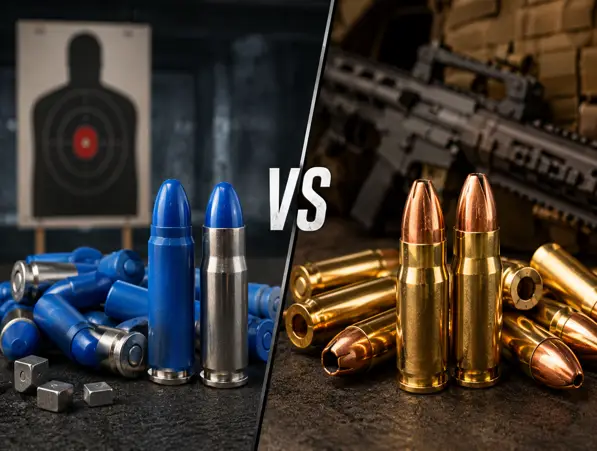
Let’s start with the basics. Duty ammunition is what most people picture when they think of a bullet. It’s a complete round made up of four parts: the cartridge case, the primer, the propellant (gunpowder), and the projectile (the bullet itself). When you pull the trigger, the firing pin strikes the primer, which ignites the gunpowder, which then pushes the bullet out of the barrel at high speed.
Duty ammunition is designed to do real damage. Whether it’s hollow point rounds made for self-defense or full metal jacket (FMJ) rounds used in the military, the whole point of duty ammo is to travel fast, hit hard, and perform reliably when it matters most.
The trade-off? Duty ammunition is not ideal for everyday practice. It’s expensive, it creates a lot of recoil, it’s permanent in its effects (you can’t take back a round once it’s fired into a surface), and in certain environments, like indoor or close-quarters ranges, it can create serious safety hazards due to ricochets and overpenetration.
Training ammunition is a broad category of rounds specifically designed for practice, simulation, and skill-building. It’s made to behave similarly to duty ammunition in terms of feel and function, but with reduced lethality, lower cost, or features that make it safer in controlled environments.
Think of this ammunition as the “practice version” of your real rounds. The goal is to help shooters build muscle memory, improve accuracy, develop trigger control, and get comfortable with their firearm, all without the risks and costs that come with firing duty rounds every single session.
Training ammunition comes in several different types, and each one serves a different purpose. Some are designed for reduced recoil. Some are made from frangible materials that break apart on impact, so there’s no ricochet. Others, like Simunitions, are used for force-on-force scenario training where officers or military personnel need to practice against real human opponents in realistic situations.
According to the National Shooting Sports Foundation (NSSF), participation in target shooting has grown steadily over the past decade, with millions of Americans visiting shooting ranges each year. As that number grows, so does the demand for affordable, effective training solutions, and training ammunition is right at the center of that conversation.
Now, let’s get into the actual differences. These aren’t just minor technical details; they affect how you train, how safe your range sessions are, and how much money you spend.
The most fundamental difference is intent. Duty ammunition is built to neutralize a threat or take down game. Training ammo is built to help you become a better shooter. That simple shift in purpose changes everything about how the round is engineered.
It is often designed with softer or lighter projectiles, lower powder charges, or, in some cases, no propellant at all. The idea is to give you the experience of firing your weapon without the full consequence of a duty round.
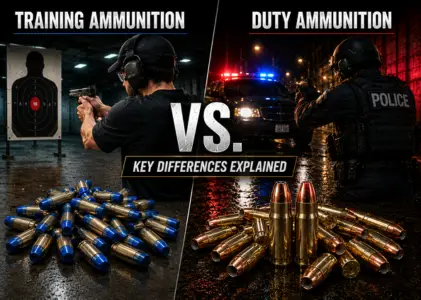
One of the biggest things shooters notice right away is recoil. Duty ammunition creates significant recoil, especially in higher-caliber firearms. Training ammo, on the other hand, is often loaded lighter, which means less recoil. For new shooters, this can actually be a double-edged sword. Less recoil can make it easier to practice fundamentals without flinching, but it can also give you a slightly unrealistic feel compared to what you’d experience with your carry ammo.
Some premium training rounds are specifically engineered to match the felt recoil of their duty counterparts, so you’re not developing bad habits. This is something worth paying attention to when choosing your training ammunition.
Duty ammunition poses serious risks in certain environments. Ricochets, overpenetration, and toxic lead exposure are all real concerns, especially at indoor ranges or in close-quarters drills.
Training ammo significantly reduces these risks. Frangible training rounds, for example, are made from compressed copper powder or similar materials that disintegrate on contact with a hard surface. This virtually eliminates the risk of ricochets, making them a popular choice for indoor ranges and shoot house environments.
This is where training ammo really works. Duty ammunition, especially in today’s market, can get expensive fast. Premium defensive rounds can run anywhere from $1 to $3 per round or more. If you’re putting 200 rounds downrange in a single practice session, that adds up quickly.
It is typically cheaper per round because it doesn’t need the premium components found in defensive or duty loads. This lets shooters practice more frequently without destroying their budget. Over time, that means more trigger time, and more trigger time means better skills.
Many shooting ranges, particularly indoor ones, have strict rules about the type of ammunition allowed on their property. Lead-free and frangible ammunition helps ranges stay compliant with environmental regulations around lead exposure and disposal. Some ranges actually require training-specific ammo for certain bays or course of fire setups.
Not all ammunition used in training is the same. Here’s a breakdown of the most common types and what they’re used for.
FMJ rounds are the most common type of ammunition used at training ranges. They have a soft lead core covered by a harder metal, usually copper, shell. They’re inexpensive, widely available, and feed reliably in most semi-automatic firearms. For general marksmanship training, these are the go-to choice for most shooters.
Frangible rounds are designed to break apart when they hit a hard surface. They’re ideal for close-range shooting drills, steel target work, and indoor environments where ricochets are a concern. Law enforcement agencies and military units often use frangible training ammo during building-clearing exercises and similar high-risk training scenarios.
This one’s in its own category. Simunition is a brand of marking cartridges used specifically for force-on-force training, situations where people are shooting at each other in a controlled, realistic scenario. Think of it as paintball for firearms professionals, except it uses actual modified firearms rather than dedicated paintball guns.
Simunition rounds contain a soap-based marking compound that leaves a visible mark on the target, allowing instructors to see exactly where shots land. They’re used extensively by law enforcement agencies, military units, and serious tactical trainers.
To use Simunitions, you typically need a Simunition conversion kit, which modifies your existing firearm to cycle the lower-powered Simunition cartridges reliably. Because standard firearms are designed around the pressure and velocity of duty ammunition, they won’t function correctly with Simunition rounds right out of the box. The conversion kit, which usually involves a replacement barrel and sometimes bolt components, allows the gun to cycle properly.
Along with the simunition conversion kit, proper simunition protective equipment is absolutely non-negotiable. These rounds may be less lethal than duty ammunition, but they can still cause serious injury, particularly to the eyes and face. Standard simunition protective equipment includes a full-face mask rated for the purpose, throat protection, groin protection, and gloves. No reputable training program allows participants in force-on-force scenarios without the proper simunition protective equipment in place.
These are duty-fire rounds loaded with a lighter powder charge to produce less recoil while still cycling the action of a semi-automatic firearm. They’re often used for new shooters, recoil-sensitive individuals, or for drills where speed and accuracy matter more than simulating full-power recoil.
Technically not ammunition at all, snap caps are inert, dummy rounds used for dry-fire practice. They protect the firing pin and allow shooters to practice trigger pull, reloading, and malfunction drills without any duty components involved. They’re the most affordable and accessible form of “training ammunition” available.
When it comes to choosing reliable ammunition, both for training and real-world use, Speer ammunition is a name that comes up consistently among serious shooters, law enforcement officers, and military personnel.
Speer has been manufacturing ammunition in the United States since 1944, and they’re best known for their Gold Dot line of defensive ammunition, which is used by more law enforcement agencies in the country than any other duty round. But Speer also produces training-grade ammunition designed to replicate the performance of their duty loads at a lower cost.
The idea behind this approach is simple and smart: if you train with ammunition that behaves similarly to what you carry, you’re developing habits and skills that will actually translate when it counts. Many departments and serious concealed carriers choose Speer ammunition specifically because they can practice with a training-grade version of the round and then carry the Gold Dot with confidence, knowing the two will feel and perform similarly.
This kind of consistency between your training ammunition and your carry load is something that a lot of experts emphasize. You don’t want to spend thousands of rounds building muscle memory with one round’s recoil characteristics and then switch to something that feels completely different in a high-stress situation. Speer ammunition addresses exactly that problem.
This is the practical question that most shooters actually want answered. And the honest answer is: it depends on what you’re trying to accomplish.
If you’re working on fundamentals, grip, stance, trigger control, sight alignment, training ammo is almost always the better choice. It’s cheaper, allows for more repetitions, and in many cases is actually better suited for the drills you’re doing. High-volume practice is where training ammo really pays off.
If you’re testing your carry gun or duty weapon for reliability with a specific load, that’s when you want to fire your actual duty ammunition. Every gun is a little different, and feeding your firearm the same round you plan to depend on and confirming that it cycles reliably is a critical part of responsible gun ownership.
For force-on-force scenarios and tactical drills involving other people, Simunition and similar marking cartridges are the only realistic option. Duty ammunition has absolutely no place in that environment, and any attempt to blur that line is catastrophically dangerous.
For steel target shooting and close-range drills, frangible training ammunition is the smart call. The last thing you want is a duty round fragment bouncing back at you or a fellow shooter.
It would be a disservice to write this article without talking about some of the mistakes people make when they switch between training and duty ammunition.
One of the most common is assuming that because they’ve trained extensively, they’re fully prepared for a self-defense situation. Training ammunition is a tool, a very useful one, but it needs to be paired with realistic scenario training, mental preparation, and regular verification with your actual carry load. Practice with training ammo as much as you want, but don’t skip the step of confirming your defensive rounds work reliably in your specific firearm.
Another mistake is treating training sessions as casual range days with no structure. The whole point of training ammo is that it allows you to practice with intent and frequency. If you’re just going to the range to have fun and burn through cheap ammo without purpose, you’re not really training; you’re just shooting. Build a training plan, set measurable goals, and track your progress.
Finally, some shooters make the mistake of using poor-quality ammunition and then wonder why their groups are inconsistent or their gun is malfunctioning. Not all budget ammunition is created equal. Buying from reputable manufacturers, whether that’s established brands like Speer or well-reviewed house brands from trusted retailers, makes a real difference in your training quality.
For civilians, the difference between training ammunition and duty ammunition is largely about cost, safety, and skill development. But for law enforcement officers and military personnel, the stakes are much higher.
Studies on officer-involved shootings have consistently shown that stress dramatically affects shooting performance. Heart rate spikes, fine motor skills degrade, and tunnel vision sets in. The only way to counteract these effects is through realistic, high-volume training that gets as close to real conditions as possible.
This is exactly why agencies invest in Simunition, realistic force-on-force scenarios, and high-quality training ammunition programs. The more realistic the training, the better the performance under pressure. Proper simunition protective equipment ensures that these realistic scenarios can happen safely, and tools like the simunition conversion kit make it possible to use actual duty weapons rather than training-specific stand-ins.
A 2020 report from the Police Executive Research Forum (PERF) highlighted the fact that many agencies across the U.S. were underinvesting in training frequency. The report found that the average officer fired their weapon for qualification purposes only a handful of times per year, far less than what many experts consider adequate for maintaining real proficiency. Quality training ammunition programs are a direct and cost-effective way to address that gap.
With so many options out there, choosing the right training ammunition can feel overwhelming. Here’s a simple framework to help you think through it.
Start by identifying your primary goal. Are you building foundational shooting skills? Go with affordable, reliable FMJ rounds in your caliber. Are you training for home defense scenarios at close range? Consider frangible ammunition that won’t create hazardous ricochets. Are you in law enforcement or tactical training and need realistic force-on-force work? Look into Simunition setups with the appropriate Simunition conversion kit and make sure you have all the required Simunition protective equipment before you start.
Next, think about your budget. Training ammunition is meant to let you shoot more, so buy enough to actually make a difference. A box of 50 rounds isn’t going to build the kind of muscle memory that comes from consistent, high-volume practice. If you’re serious about improving, buying in bulk from reputable sources and planning your training sessions in advance will stretch your budget further and give you better results.
Finally, pay attention to quality. Not every cheap round feeds reliably, and malfunctions during training can create bad habits (like anticipating a stoppage) that carry over to real situations. Stick with brands that have a track record of consistency and reliability.
In most cases, no, at least not as your primary carry load. Training ammunition, including FMJ rounds, is typically not optimized for stopping power or terminal performance in a self-defense situation. Most experts and law enforcement agencies recommend using purpose-built defensive rounds, like Speer Gold Dot or similar hollow-point ammunition, for actual carry use. Train with training ammunition, but carry what’s designed for the job.
Yes, in most cases. Standard firearms are built around the pressure levels of duty ammunition, and Simunition rounds operate at much lower pressures. Without a simunition conversion kit, which typically includes a modified barrel and sometimes bolt components, the gun won’t cycle properly. Using Simunition rounds without the appropriate conversion kit can also cause damage to your firearm.
At a minimum, Simunition protective equipment should include a full-face mask rated for force-on-force training, throat protection, groin protection, and gloves. Some programs also require additional body padding. No responsible instructor will run a force-on-force scenario without ensuring every participant is wearing the correct Simunition protective equipment. Simunition rounds are less lethal than duty ammo, but they can cause serious injury, especially to the face and eyes, if proper protection isn’t worn.
Speer ammunition has a strong reputation for quality and consistency, backed by decades of manufacturing experience and widespread use in law enforcement. Their training loads are designed to closely replicate the feel and function of their defensive Gold Dot line, which makes them a smart choice for shooters who want seamless consistency between their practice rounds and their carry ammo. Compared to generic or house-brand options, Speer ammunition tends to offer better reliability and more consistent performance.
There’s no universal answer, but most qualified firearms instructors suggest that structured, intentional practice matters more than raw volume. That said, shooting at least 100 to 200 rounds per month in deliberate, focused training sessions, rather than casual plinking, is a reasonable baseline for maintaining and building skill. If you’re preparing for a specific qualification or competition, that number should increase. The key word is “structured”, make every round count.
Disclaimer: This article is intended for educational purposes. Always follow all applicable local, state, and federal laws regarding ammunition purchase, storage, and use. Consult a certified firearms instructor before beginning any training program.